Longevity
Muscle Strength and Healthy Ageing
How resistance exercise relates to everyday function, what research has found and how to plan an individual starting point.
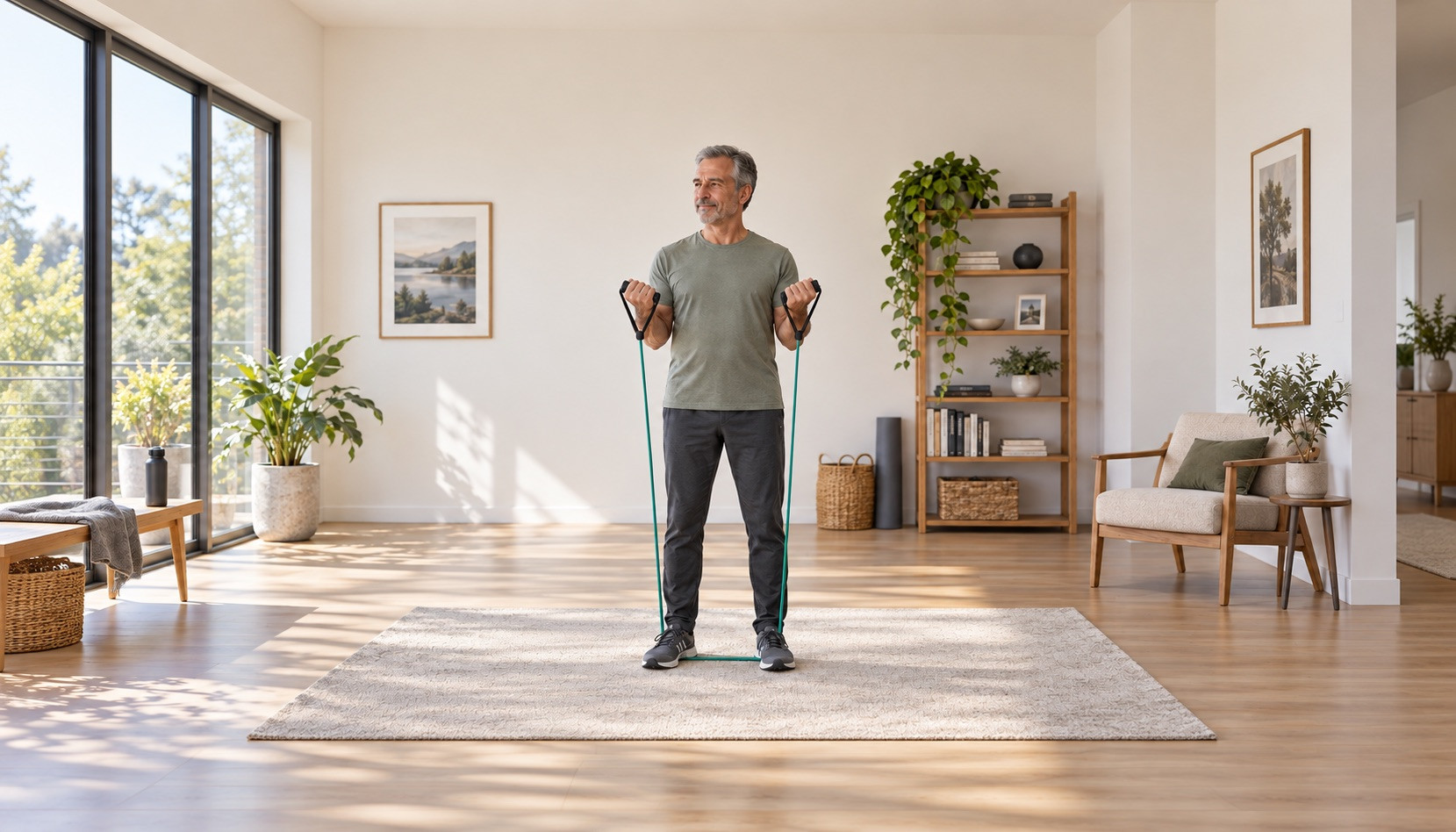
You use muscle strength to climb stairs, carry shopping and get out of a chair. Keeping these activities manageable is one practical goal of healthy ageing.
Why assess strength?
Muscle strength affects how comfortably we manage daily tasks. Significant weakness needs assessment as we age. Sarcopenia is a clinical condition involving loss of muscle health; it cannot be diagnosed from a photograph or body weight alone. Assessment may consider strength, muscle quantity and physical performance together. [4]
Is walking enough?
Walking is an accessible form of activity, but general recommendations also include resistance-based muscle strengthening. WHO recommends 150–300 minutes of moderate aerobic activity weekly or an equivalent vigorous amount, plus strengthening major muscle groups on at least two days. These population targets need adaptation to health, starting level and mobility. [1,2]
What is resistance exercise?
Resistance exercise uses body weight, bands, free weights or suitable equipment to make muscles work against a load. The programme needs to suit your capacity. If you have significant weakness, a physiotherapist or relevant exercise professional can help with planning. [4]
What did the LISA follow-up find?
The 2024 follow-up report concerned a trial initially allocating 451 people around retirement age to one year of supervised heavy resistance training, moderate exercise or a control group. At four years, 369 participants were reassessed.
A particular measure of isometric leg strength remained near baseline in the heavy-training group and declined in the others. This does not mean everyone should begin with heavy weights. Participants were relatively healthy, well-functioning older adults, limiting generalisation to every patient or age group. The study measured muscle function, not lifespan or years of life added. [3]
Starting priorities
Start with a routine you can sustain. Learn the movements, then increase resistance as your capacity develops. Exercise choice and load need to be adapted to the individual. [4]
- Identify everyday movements you find difficult.
- Make space for both aerobic and strength activities.
- Consider balance work, particularly in later life.
- Track ease of daily tasks alongside appearance.
Balance and coordination alongside strength are important parts of activity planning in older age. [1]
What to discuss with your doctor
Share recent strength changes, falls, symptoms during movement and existing conditions. Assessment and referral can be tailored when needed. A healthy-ageing plan can begin with the daily functions you most want to preserve.