On this page
What is RF microneedling?
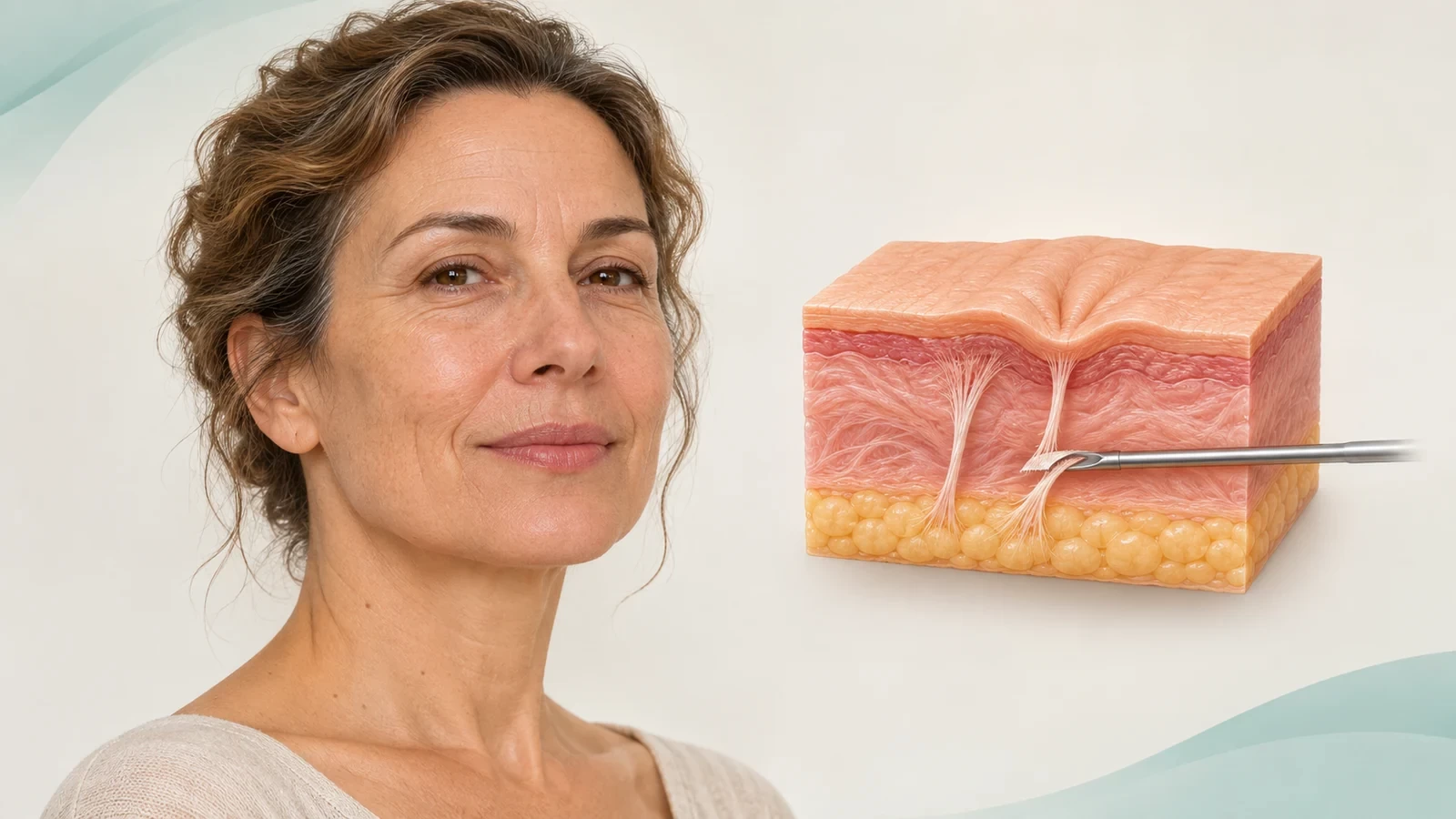
Radiofrequency microneedling, often called “gold needle” treatment in Türkiye, uses fine needles to reach a planned depth in the skin. Energy delivered at that depth creates small, controlled areas of heating.
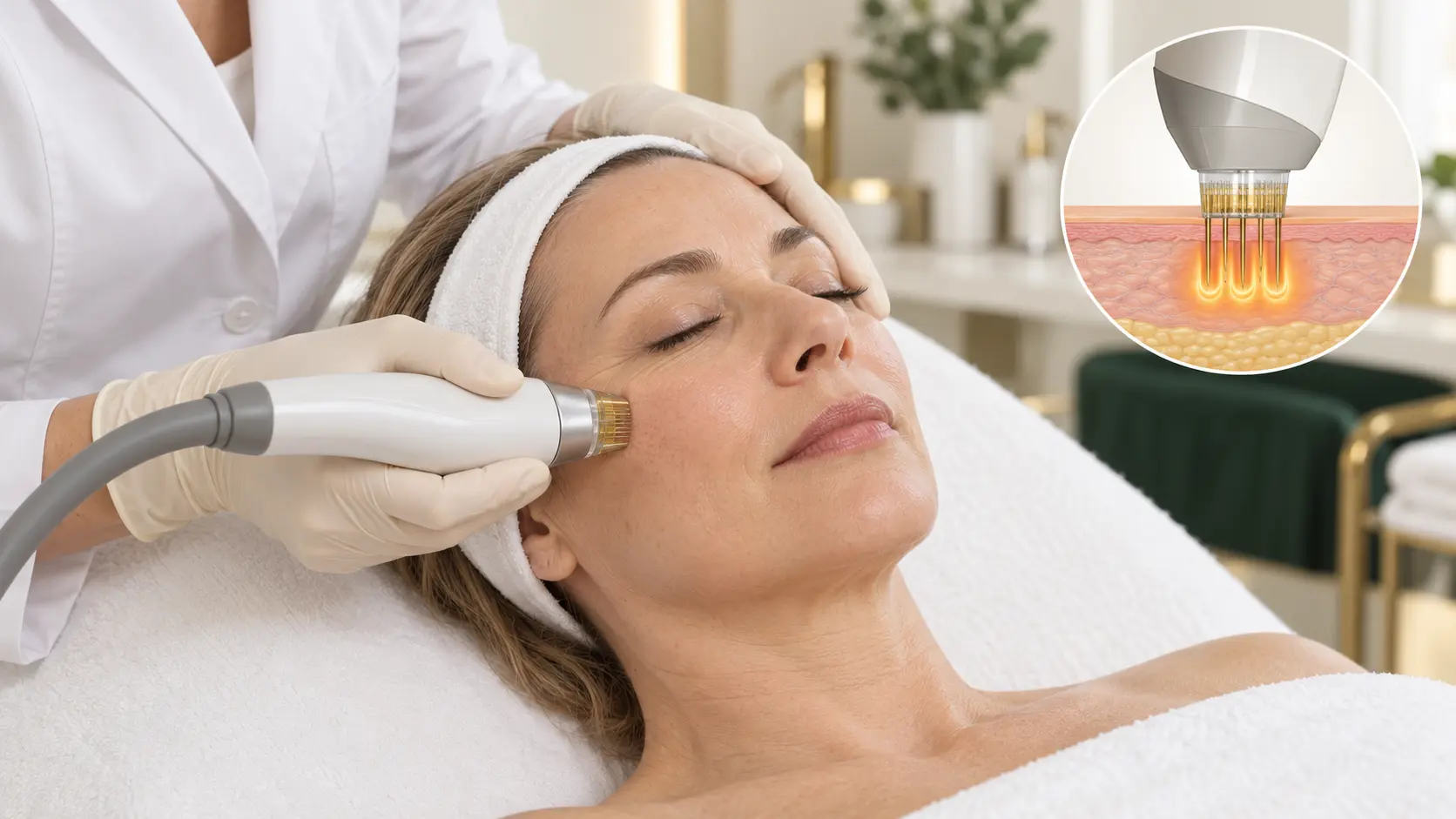
Adjusting needle depth, energy and the number of passes allows different skin layers to be targeted. The same device can therefore be used for different treatment plans.
How does it differ from conventional microneedling?
Conventional microneedling creates controlled microchannels. RF microneedling adds energy delivery once the needles reach a selected depth. Its effect is not limited to needle entry alone.
Devices differ in needle construction, energy delivery and settings. I plan treatment around those features, your skin and the concern being addressed.
Which concerns may be considered?
Skin texture, visible pores, depressed acne scars, fine lines and mild laxity may be assessed on the face and neck. These concerns have different causes. Scar type and depth matter for acne scarring; tissue thickness and support loss matter for laxity.
RF microneedling alone does not correct substantial volume loss or advanced sagging.
When might changes become noticeable?
Early swelling can temporarily make the skin appear fuller and should not be mistaken for a lasting result. Initial texture changes may appear in two to four weeks. Collagen-remodelling changes are often assessed at 6–12 weeks and may continue over three to six months.
Starting skin condition, age, depth, energy and session number affect timing.
Combining it with PRP or mesotherapy
These may be considered within the same treatment plan. PRP is prepared from your own blood, whereas mesotherapy uses selected formulations such as hyaluronic acid, PN/PDRN or amino acids.
Procedures may be planned in the same session or separately to allow healing. Composition, sterility and the recommended route are checked for each product. A preparation made for injection is not automatically suitable for applying to the skin after microneedling.
What I assess at the first consultation
- Skin: thickness, sensitivity, pigmentation tendency, active acne, scar type and area.
- Depth and energy: settings vary with local anatomy rather than using one setting for the whole face.
- We discuss the number and spacing of sessions and whether another procedure would be helpful.
Treatment and recovery
Skin is cleansed and a topical anaesthetic is commonly used. The handpiece contacts the planned areas using the selected depth and energy. Duration depends on the treatment area.
Redness and mild swelling often decrease over one to three days. Pinpoint marks, sensitivity or fine crusting may last longer. Gentle care, sun protection and the products advised by your doctor are important during recovery.
Precautions and possible adverse effects
Active infection, cold sores, markedly inflamed acne, open wounds or significant sensitivity may require postponement. Discuss pigmentation tendency, healing problems, medication, pregnancy or breastfeeding and previous procedures.
Temporary redness, swelling and tenderness are possible. Unsuitable energy or depth can cause burns, pigment changes, scarring or unwanted tissue effects, making medical assessment and device experience important. Contact your doctor for unexpected pain, blistering or worsening discolouration.
Frequently asked questions
When can I expect to see an effect?
Early swelling is not the final result. Initial changes may appear in two to four weeks, with a more meaningful assessment at 6–12 weeks and further development over three to six months.
How many sessions are needed?
A commonly used starting plan for skin quality is three sessions around four to six weeks apart. Mild texture concerns and deep scars require different plans; sessions and settings are adjusted to the response.
Is it the same as ordinary microneedling?
No. Radiofrequency energy is delivered through the needles at the chosen depth, so the settings and planning differ.
Can it be combined with PRP or mesotherapy?
In suitable people, yes. Timing, formulation, sterility, route and the skin’s needs determine whether procedures are combined or separated.
How long does redness last?
It often settles substantially over one to three days. Pinpoint crusting or sensitivity may continue for several more days, depending on settings, area and skin sensitivity.
Can it be used for acne scars?
Depressed scars may be considered, but scar type, depth, skin tone and active acne need assessment. Some scars require a staged plan combining different methods.
Sources and further reading
- Radiofrequency Microneedling: A Comprehensive and Critical Review
- Comparison of the efficacy of Fractional Radiofrequency Microneedling alone and in combination with platelet-rich plasma in neck rejuvenation: a clinical and optical coherence tomography study
- How fractional radiofrequency microneedling works
- Potential Risks with Certain Uses of Radiofrequency (RF) Microneedling – FDA Safety Communication | FDA