On this page
What is HIFU?
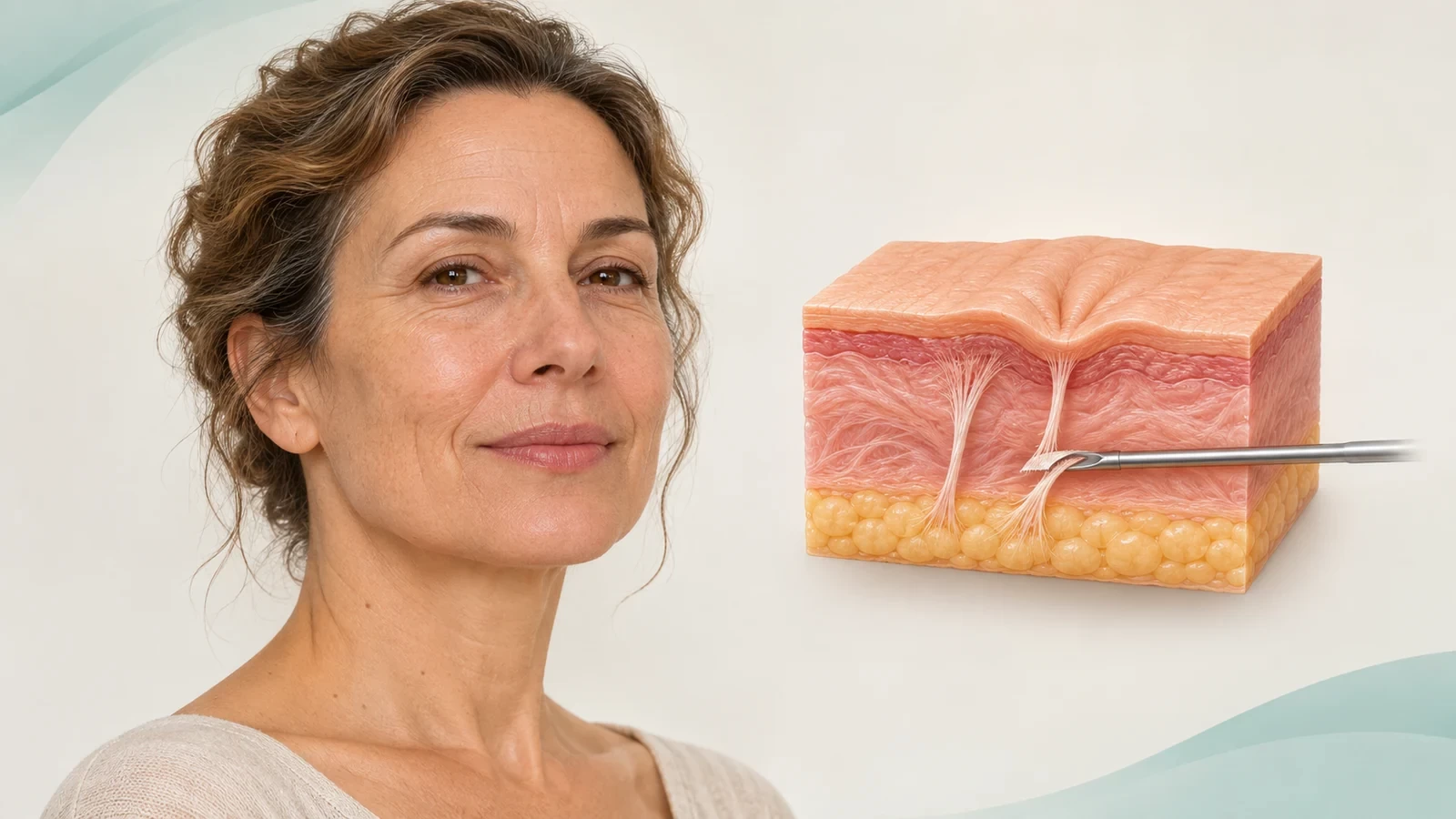
When skin and supporting tissue lose firmness, the jawline may become less defined and the lower face may look heavier. This can occur without a lack of volume. HIFU is one approach I may consider after assessment.
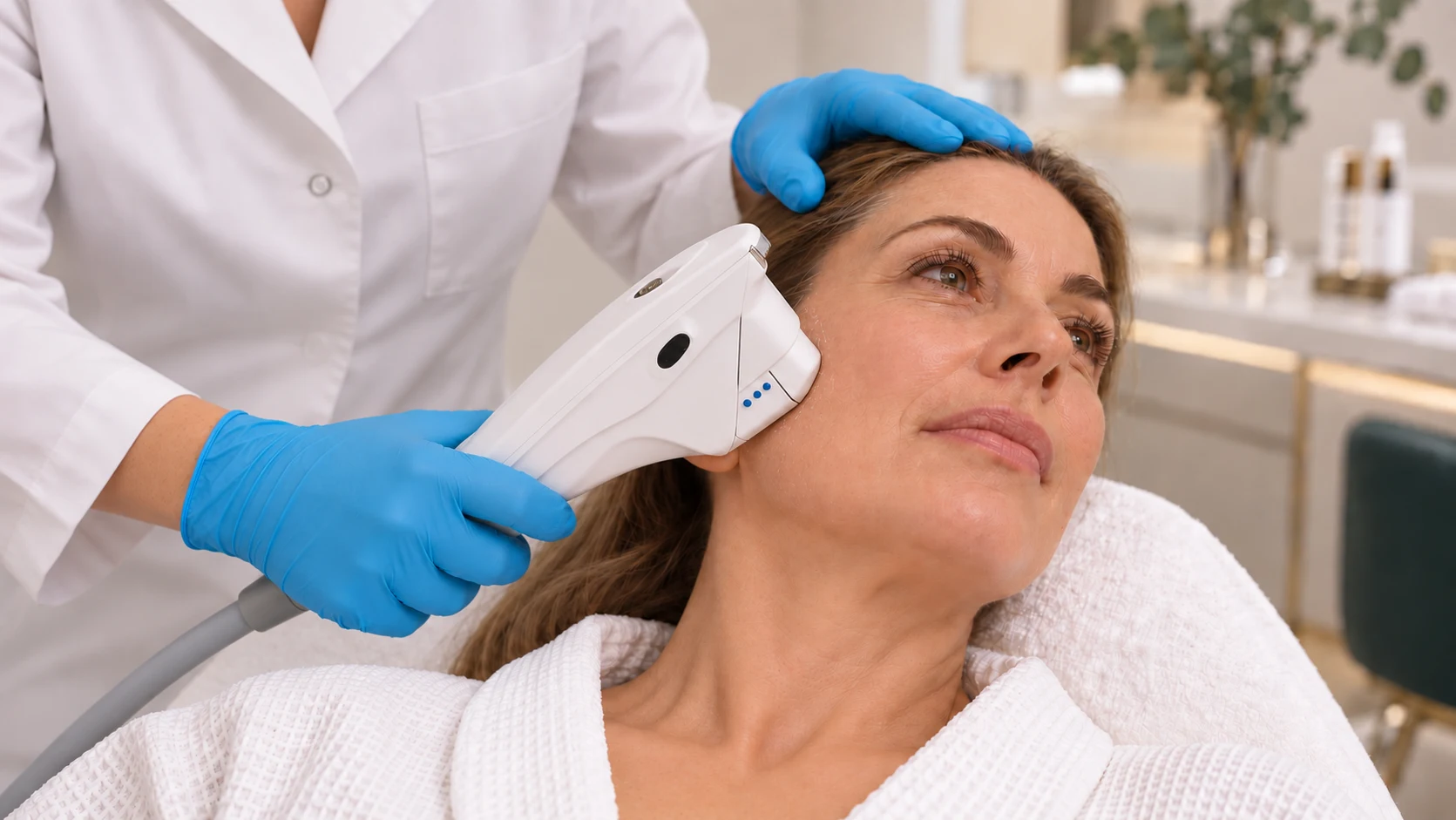
High-intensity focused ultrasound concentrates energy at selected tissue depths without needle entry. Small areas of controlled heating aim to encourage connective-tissue remodelling and gradual tightening.
Which tissue layers are involved?
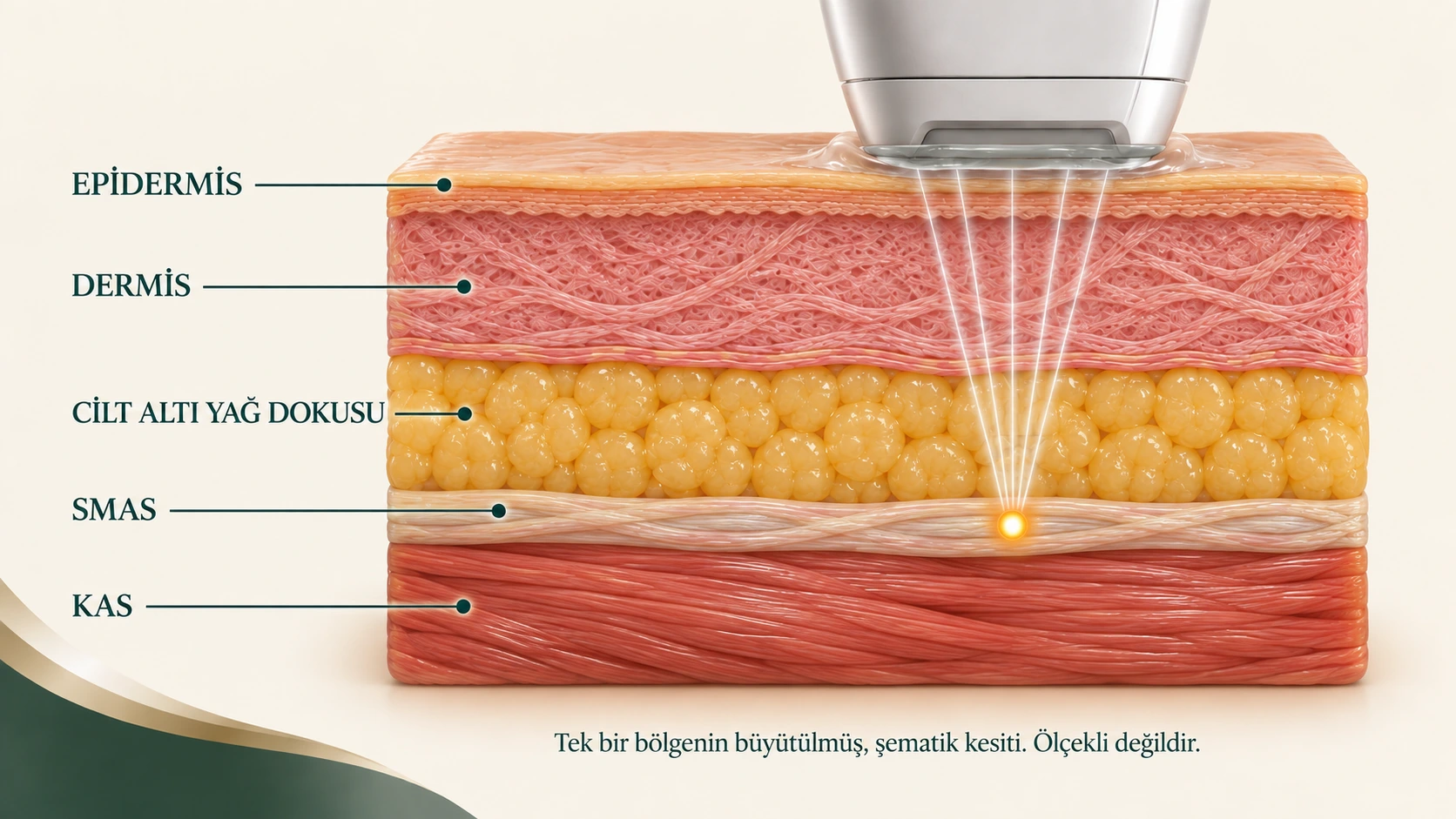
The epidermis lies at the surface, with the collagen- and elastin-containing dermis beneath. Deeper layers include subcutaneous fat and the superficial musculoaponeurotic system, or SMAS. These are layers within an area, not different regions of the face.
The selected handpiece and plan may target dermal or deeper fascial support tissue. A cartridge does not affect every layer simultaneously. Tissue thickness and position differ by facial area, so a labelled depth does not guarantee the same anatomical target in everyone.
Which areas may be considered?
The lower face, jawline, under-chin area and neck may be assessed for mild to moderate laxity. Under the chin, loose skin, fat and chin structure need to be distinguished; they do not all respond to the same approach.
Neck treatment also respects skin characteristics and anatomical boundaries. The whole neck is not treated uniformly. Areas are selected during examination.
How I plan treatment
I assess where tissue has loosened and where volume has been lost. A thin face with less volume needs a different plan from a fuller face. When treating the jawline, I also aim to preserve the face's overall balance.
I use the Solaris-D HIFU device at my practice. I choose the area, handpiece and energy after an individual assessment. Increasing the number of shots or the energy does not automatically improve the result.
Previous fillers, biostimulators, threads and surgery affect the plan. If HIFU is unsuitable, we discuss another approach or the option of not treating.
When may results appear?
An early feeling of tightness or swelling is not the lasting result. Initial changes may be noticed at around four to six weeks; a more meaningful comparison is often made at three months. Remodelling may continue for three to six months.
Photographs taken in consistent light and position are more useful than daily mirror checks. These are approximate review intervals, not a guarantee of onset. Some people see limited change; a dramatic immediate facelift result is not a realistic expectation.
Sessions and duration
One common approach is to review a single session at about three months, then at six months if needed. The response guides any further treatment.
Studies commonly assess improvement over three to six months; some report improvement at 12 months. Review during the 6–12-month period may be considered, but this is neither a guarantee of duration nor an automatic retreatment date. Ageing and tissue changes continue.
Is it a non-surgical facelift?
That phrase should not imply an outcome equivalent to surgery. HIFU neither removes excess skin nor surgically repositions tissue. It may be insufficient for substantial excess skin, advanced sagging or significant volume loss. More modest tightening expectations may be appropriate for milder laxity.
Treatment day and aftercare
The skin is cleansed, areas are marked and gel helps the probe maintain suitable contact. Brief heat, stinging or deep aching can occur during energy delivery. Appointment time depends on the area and plan and is clarified beforehand.
Many people return to everyday activities the same day. Mild redness and swelling generally decrease within hours to one or two days. Tenderness may last several days, sometimes one to two weeks. Gentle skincare and sun protection are advised, avoiding irritating products and intense heat initially.
Temporary numbness can occur. Burns, nerve effects or unwanted volume loss are less common risks. Increasing pain, blisters, marked asymmetry or prolonged altered sensation require contact with the practice without waiting for review.
What to mention at the consultation
Discuss pregnancy or breastfeeding, active infection or open wounds, facial implants, electronic devices such as a pacemaker, sensory changes and previous facial procedures. These do not all carry the same implications; suitability depends on device instructions and individual circumstances.
Frequently asked questions
When should I judge the result?
Around three months is usually more informative than the first few days. Initial changes may appear at four to six weeks, with development over three to six months. These intervals are not result guarantees.
How long does the effect last?
Studies commonly follow results for three to six months, sometimes to 12 months. Review at 6–12 months does not mean every result lasts a year or that repeat treatment is compulsory then.
How many sessions are needed?
Single-session starting plans are common. Assessing the response at three months, and when needed six months, is preferable to automatic repetition at short intervals. Device, anatomy and response guide further sessions.
Is it painful?
Brief heat, stinging or deep aching may occur, particularly over bone. It should not be described as entirely painless. Comfort measures can be discussed.
Can it reduce facial fat?
Ultrasound energy can affect fat tissue. A thin or volume-depleted face therefore requires a different plan. Fat reduction is not the goal in every area; preserving volume also matters.
Is it the same as RF microneedling?
No. HIFU uses focused ultrasound without needles; RF microneedling delivers radiofrequency through needles. Laxity, texture and scars may require different approaches.
Can it be planned with fillers or biostimulators?
Sometimes, but not necessarily in the same area on the same day. The location and timing of earlier injections or threads matter. Sequence and spacing depend on the products and energy treatment.
Interpreting the research
The cited publications examine different focused-ultrasound systems. Their findings should not be presented as a direct result or effectiveness guarantee for Solaris-D.
Sources and further reading
- A Systematic Review of the Efficacy of Microfocused Ultrasound for Facial Skin Tightening
- Evaluation of a Novel Microfocused Ultrasound with Three‐Dimensional Digital Imaging for Facial Tightening: A Prospective, Randomized, Controlled Trial | Dermatology and Therapy
- Long-term Efficacy of Micro-focused Ultrasound with Visualization for Lifting and Tightening Lax Facial and Neck Skin Using a Customized Vectoring Treatment Method | JCAD - The Journal of Clinical and Aesthetic Dermatology